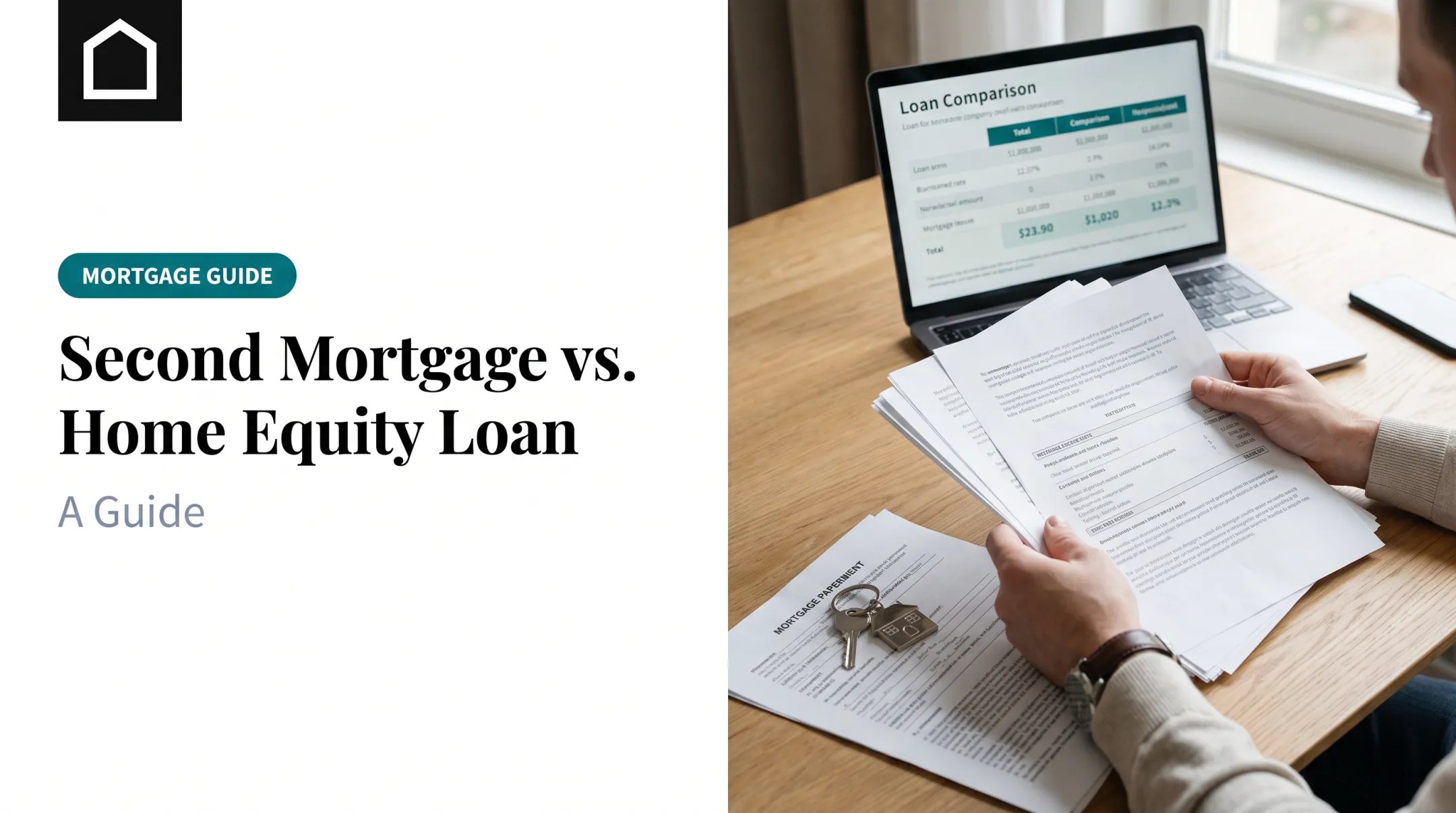

The decision isn't cosmetic. It affects your monthly budget, how much interest you'll pay over time, and how much flexibility you have if your plans change. Homeowners with mortgages are holding nearly $17 trillion in equity, with about $11 trillion considered tappable, according to ICE Mortgage Monitor's March 2026 report. Borrowers pulled $205 billion out of that equity in 2025 alone, the highest annual total since 2022.
This guide breaks down both options so you can figure out which one actually fits your situation.
Key Takeaways
- A second mortgage delivers a lump sum with a fixed rate and predictable payments.
- A HELOC gives you a revolving credit line with variable rates and draw-as-needed flexibility.
- Both loans sit behind your primary mortgage, so missed payments put your home at risk.
- Your choice should hinge on how you'll use the money and your comfort with rate swings.
- A mortgage advisor can help match the loan structure to your equity position and goals.
Second Mortgage vs. HELOC: Quick Comparison
| Factor | Second Mortgage | HELOC |
|---|---|---|
| Fund disbursement | Lump sum at closing | Revolving credit, draw as needed |
| Interest rate | Fixed | Variable, tied to prime |
| Repayment | Fixed principal + interest from day one | Draw period (often interest-only), then repayment period |
| Best for | One-time, known expenses | Ongoing or unpredictable costs |
| Typical costs | Closing costs often run 1%-5% of the loan amount | Often lower or no upfront fees; possible annual or inactivity fees |
Rates on both products move independently. As of August 2026, the national average second mortgage (home equity loan) rate sits at 8.13%, while the national average HELOC rate is 7.30%. These numbers shift, so check current rates before deciding.

What Is a Second Mortgage (Home Equity Loan)?
A second mortgage, also called a home equity loan, is a lump-sum loan secured by the equity in your home. It sits behind (is "subordinate to") your primary mortgage, meaning your first lender gets paid first if things go sideways.
Core benefits:
- Predictable, fixed monthly payments for the life of the loan
- Lower rates than credit cards or personal loans
- Simple structure for large, one-time expenses
Lenders typically look at your credit score, remaining home equity, and loan-to-value ratio before approving you. According to Bankrate's 2025 borrowing requirements guide, most lenders want you to keep at least 15%-20% equity after the loan closes. Terms can range widely, from short 5-year payoffs to 30-year structures, depending on the lender.
Use Cases of a Second Mortgage
This loan type works best when you know exactly how much you need upfront:
- Debt consolidation — rolling high-interest credit card balances into one fixed payment
- Home renovations — funding large projects with a set budget
- Education costs — covering tuition or other known totals
Here's why consolidation math works in a homeowner's favor. The average credit card APR sits at 19.56%, compared with recent home equity loan averages around 8.13%. Moving $20,000 in card debt to a home equity loan could cut your interest rate by more than half.

What Is a HELOC?
A HELOC, or home equity line of credit, works more like a credit card than a traditional loan. It's a revolving credit line secured by your home equity, and you only pay interest on what you actually draw.
HELOCs run in two phases:
- Draw period — typically 5-10 years, often interest-only payments
- Repayment period — typically 10-20 years, where you pay down both principal and interest

Core benefits:
- Borrow only what you need, when you need it
- Interest accrues only on the drawn balance, not the full credit line
- Ideal for phased or uncertain expenses
When a HELOC Fits Best
HELOCs fit situations where costs unfold over time rather than arriving as one bill:
- Phased home improvements, such as a multi-stage kitchen and bathroom remodel
- Emergency funds you hope not to touch but want available
- Buying a second home where costs may vary
That flexibility comes with variable pricing. HELOC rates track the prime rate closely, so Fed policy moves matter more than they do for fixed-rate second mortgages.
After the Fed's rate cuts through 2025, Bankrate reported the average $30,000 HELOC dropped to 7.17% by March 2026, its lowest level in more than three years. The trade-off for draw-as-you-go access is living with that rate movement on any balance you carry.
Second Mortgage vs. HELOC: Which Is Better for You?
There's no universal answer. It comes down to a few honest questions:
- Do you know the exact amount you need? A second mortgage usually fits better.
- Will expenses arrive in stages or unpredictably? A HELOC's flexibility wins.
- How do you feel about rate swings? Fixed-rate second mortgages remove that worry.
- What does your equity support? Lenders still review loan-to-value and credit for either product.
Choose a second mortgage if you:
- Need a fixed sum upfront
- Want payment certainty from day one
- Prefer locking in a rate now
Choose a HELOC if you:
- Want ongoing access to funds as needs change
- Expect costs to arrive over time
- Can handle variable rate movement
A mortgage advisory review can sort through your equity position, income, and goals without a forced default product. That conversation often surfaces options you hadn't considered, including a cash-out refinance as a third path.
Real World Example: Choosing the Right Equity Financing Option
Picture a homeowner carrying $25,000 in credit card debt at 19.56% APR alongside a vague plan to remodel a kitchen sometime next year. These are two very different financial problems, and they call for two different tools.
For the credit card debt, the math is straightforward: a fixed-rate home equity loan at roughly 8.13% locks in savings immediately and gives a clear payoff date. No guessing, no rate risk.
For the kitchen remodel, the story flips. Costs aren't finalized yet, contractor bids vary, and the project might stretch over several months. Drawing from a HELOC as bills come in avoids borrowing (and paying interest on) money that's sitting unused.
Rate movement matters too. When HELOC rates hit 10.16% in early 2024, a $50,000 balance cost roughly $423 a month in interest. By 2025, with rates down to 7.63%, that same balance cost about $318 a month, a real swing tied directly to Fed policy.

Match the loan to the problem, not the other way around. If you're weighing a similar decision, talk with ClearPoint Mortgage Advisors before committing. A short conversation can save years of unnecessary interest.
Conclusion
There's no single "better" choice between a second mortgage and a HELOC.
A second mortgage gives you certainty: a fixed sum, a fixed rate, and a fixed payment that won't move regardless of what the Fed does next. A HELOC gives you flexibility: borrow only what you need, when you need it, at a rate that can rise or fall with the market.
The right decision comes down to your specific needs, your risk tolerance, and how your equity position lines up with lender requirements. Both loans sit behind your primary mortgage and carry real risk if payments lapse, so this isn't a decision to rush. Talk it through with a ClearPoint mortgage advisor who can look at your full financial picture before you sign anything.
Frequently Asked Questions
Which is better, a second mortgage or a HELOC?
It depends on your needs. Choose a second mortgage for predictable, fixed payments on a known expense. Choose a HELOC if you want flexible, ongoing access to funds and can tolerate a variable rate.
What is the difference between a second mortgage (home equity loan) and a home equity line of credit (HELOC)?
A second mortgage gives you a lump sum with a fixed rate and set repayment schedule. A HELOC is a revolving credit line with a variable rate, letting you draw funds as needed.
How much would a $100,000 home equity loan or HELOC cost per month?
For example, a $100,000 home equity loan at 8% over 15 years runs about $956 a month. A HELOC may cost less upfront if you pay interest only during the draw period, then more once repayment begins. Ask a lender for a quote based on your rate and term.
What happens at the end of a 10-year HELOC?
Most HELOCs shift from a draw period, often interest-only, into a repayment period lasting 10-20 years. Once that switch happens, your payments typically increase since you're now paying down principal too.
Is a second mortgage a good idea?
It can be smart for consolidating high-interest debt or funding a large, known expense at a lower rate than credit cards. Just remember it adds a second monthly payment and puts your home at risk if you fall behind.
How much equity do I need for a second mortgage?
Most lenders want you to retain at least 15%-20% equity after the new loan closes. Exact requirements vary by lender, credit score, and overall financial profile.