
The catch? Traditional HELOCs come with variable rates that move with the prime rate. That makes budgeting a guessing game.
Fixed-rate HELOCs aim to fix that problem, literally. But not every "fixed-rate HELOC" works the same way. This guide breaks down what they are, how they function, and how to figure out if one fits your situation.
Key Takeaways
- A fixed-rate HELOC locks in your interest rate so payments don't shift with the market
- Some lenders offer fixed rates from day one; others let you convert part of a variable balance later
- Expect a slightly higher starting rate or fee in exchange for that stability
- Your best choice depends on risk tolerance and where you think rates are headed
What Is a Fixed-Rate HELOC?
A fixed-rate HELOC is a home equity line of credit where the interest rate on some or all of your balance stays constant. Standard HELOCs, by contrast, carry variable rates tied to the prime rate, which means your payment can change even if you haven't borrowed a dime more.
The CFPB confirms that some HELOC plans let borrowers convert a variable balance to a fixed rate. That fixed rate is usually higher than the variable rate.
Why this product exists: predictability. When the Fed shifts rate policy, variable HELOC payments can swing. A fixed-rate structure protects you from that volatility on the locked portion of your balance.
Fixed-Rate HELOC vs. Home Equity Loan
Don't confuse this with a fixed-rate home equity loan. That's a lump-sum second mortgage with fixed payments from day one. A fixed-rate HELOC keeps the revolving-credit structure of a HELOC, but fixes the rate on some or all of what you've drawn.
Two common structures:
- Fixed at origination: the lender sets a fixed rate on the account from the start
- Convert-to-fixed: you draw against a variable-rate line, then lock in a fixed rate on part or all of the balance later
Those structures matter more as HELOC use rises. Originations were up 16.8% year-over-year in Q2 2026, according to TransUnion. Fixed-rate features are still less common than plain variable HELOCs, but adoption is climbing with overall demand.

How Does a Fixed-Rate HELOC Work?
A fixed-rate HELOC moves through three stages: rate-setting, the draw period, and repayment. Each stage works differently depending on whether your lender fixes the rate upfront or lets you lock it later.
Rate-Setting and Initiation
The fixed rate gets set one of two ways:
- At origination — based on your creditworthiness and current market conditions
- At conversion — when you choose to lock a portion of an existing variable balance
Lenders often put guardrails on this. Many cap how many fixed-rate advances you can lock at once, limit new locks per calendar year, and require a minimum advance amount—often around $10,000. Your lender's rules will vary, so read the fine print.
Draw Period and Core Operation
The draw period typically runs 5 to 10 years. During this window, funds remain accessible, and payments on any locked portion stay level no matter what the Fed does.
Two product types handle this differently:
- Fully disbursed fixed-rate HELOCs — you receive funds upfront and begin principal-and-interest payments immediately
- Conversion-style products — you draw as needed on a variable line, then lock a fixed rate on chosen advances later
Some conversion-style products lock each fixed advance for a set term—commonly up to 240 months—while draw-period minimum payments on the remaining variable portion may be interest-only and may not reduce that balance at all.

Repayment Period
Once the draw period ends, repayment begins, usually spanning 10 to 20 years. Per the CFPB, lenders may structure this repayment window either way depending on the original agreement.
Even if the Fed raises rates during your repayment years, your locked-portion payment stays the same.
Fixed-Rate vs. Variable-Rate HELOCs
The core difference comes down to rate movement. Variable HELOCs track the prime rate, currently 6.75% as of late August 2026 according to the Federal Reserve's H.15 release.
Fixed-rate advances lock in a rate that includes prime, the lender's standard margin, and a lock-in premium. That structure is why fixed options usually start higher.
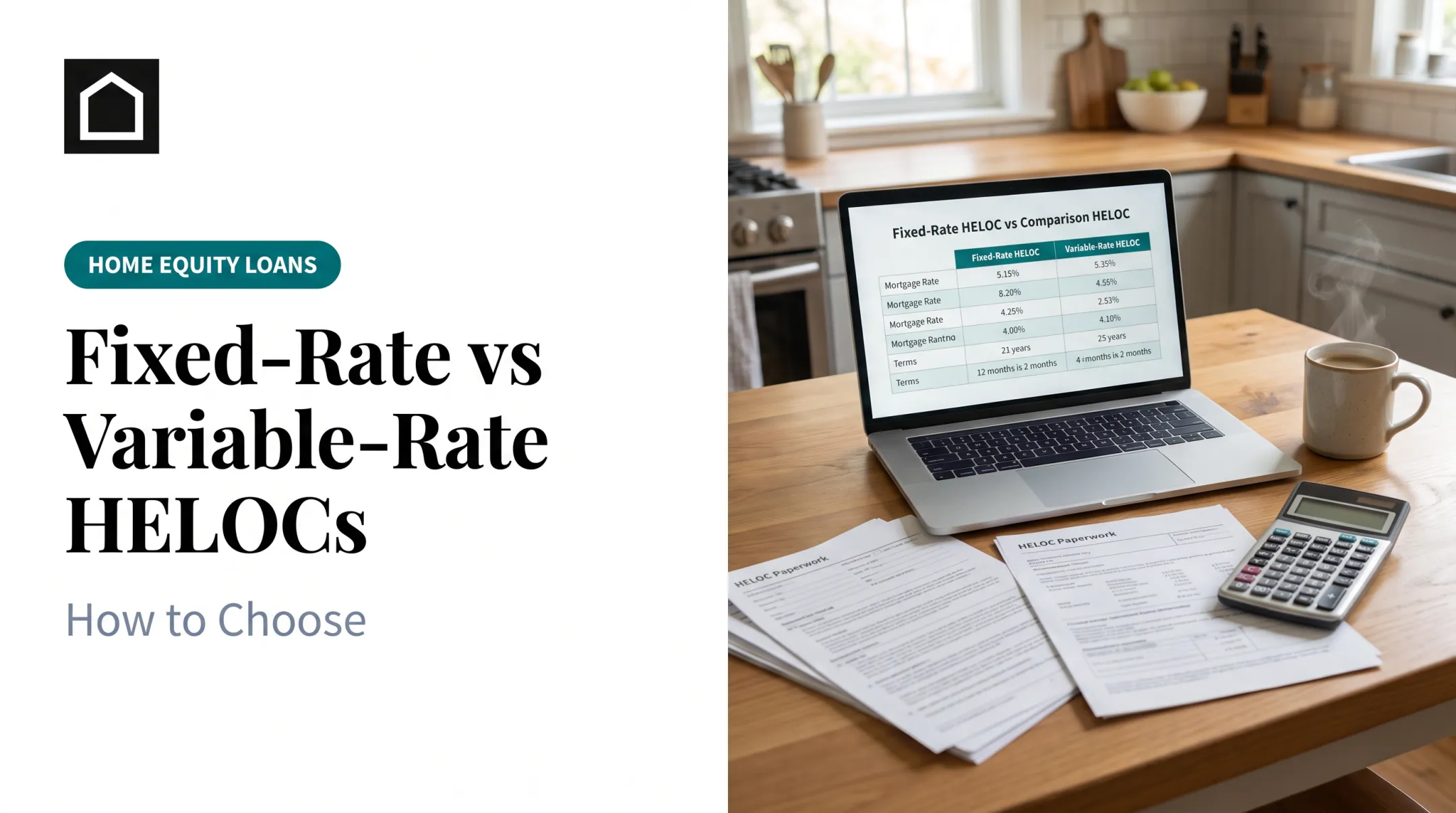
| Feature | Variable-Rate HELOC | Fixed-Rate HELOC |
|---|---|---|
| Rate movement | Changes monthly with prime | Locked for the advance term |
| Starting rate | Typically lower | Typically higher |
| Payment predictability | Unpredictable | Predictable |
| Benefit if rates drop | Automatic | Requires conversion, often with a fee |
Some lenders let you convert a locked balance back to variable if rates fall significantly, but that flexibility usually comes with a fee. Weigh that cost against how much you'd actually save.
Pros and Cons of Fixed-Rate HELOCs
Advantages:
- Predictable payments make budgeting simpler, especially for fixed-income households
- Protection against rising interest rates driven by Fed policy shifts
- Fixed rate locked on a portion of your balance, even as market rates fluctuate
Disadvantages:
- Often carries a higher initial rate than the variable equivalent
- No benefit from rate drops unless you pay a conversion fee
- Fewer lenders offer this feature, so your options may be limited
- Some products cap how much you can lock or require minimum advance amounts
The CFPB's HELOC brochure also flags that lenders can freeze or reduce your line if home values drop or your financial situation changes, regardless of rate structure. That risk applies to both fixed and variable HELOCs.

When to Consider a Fixed-Rate HELOC
A fixed-rate HELOC tends to make the most sense if you:
- Want predictable monthly payments more than potential rate savings
- Are on a fixed income and can't absorb payment swings
- Expect rates to rise or stay elevated over your borrowing timeline
- Are funding a known-cost project—like a kitchen remodel or debt consolidation—where a set payment matters more than draw flexibility
If you're unsure how a fixed-rate structure stacks up against your specific financial picture, a mortgage advisory service like ClearPoint Mortgage Advisors can help you compare HELOC structures side by side before you commit. Qualification rules and product terms vary by lender, so a second look at the numbers helps you choose with confidence.
Frequently Asked Questions
Is a fixed-rate HELOC a good idea?
It can be, especially if you prioritize payment stability or expect rates to climb. It's less appealing if you're hoping to benefit from future rate drops without paying a conversion fee.
What's the difference between fixed and variable rate HELOCs?
Fixed rates stay constant for the locked term, while variable rates shift with the prime rate and Fed policy changes. Variable HELOCs typically start lower but carry more payment risk.
Can I convert an existing HELOC to a fixed rate?
Many lenders allow you to lock part or all of a variable balance during the draw period. Some charge a conversion fee, and minimum lock amounts often apply.
Can I pay off a fixed-rate HELOC early?
Most lenders allow early repayment without penalty, but confirm the specific terms with your lender first. Early termination fees can apply in some cases, particularly if you sell your home.
Who offers fixed-rate HELOCs?
Banks, credit unions, and online lenders all offer versions of this product, though availability and terms vary widely. Compare rate caps, lock fees, and minimum advance amounts before choosing one.
How does a fixed-rate HELOC compare to a home equity loan?
Both use your home equity as collateral, but a HELOC is revolving credit while a home equity loan delivers a lump sum with fixed payments from day one. A fixed-rate option on a HELOC gives you similar payment predictability without giving up the flexibility of a credit line.