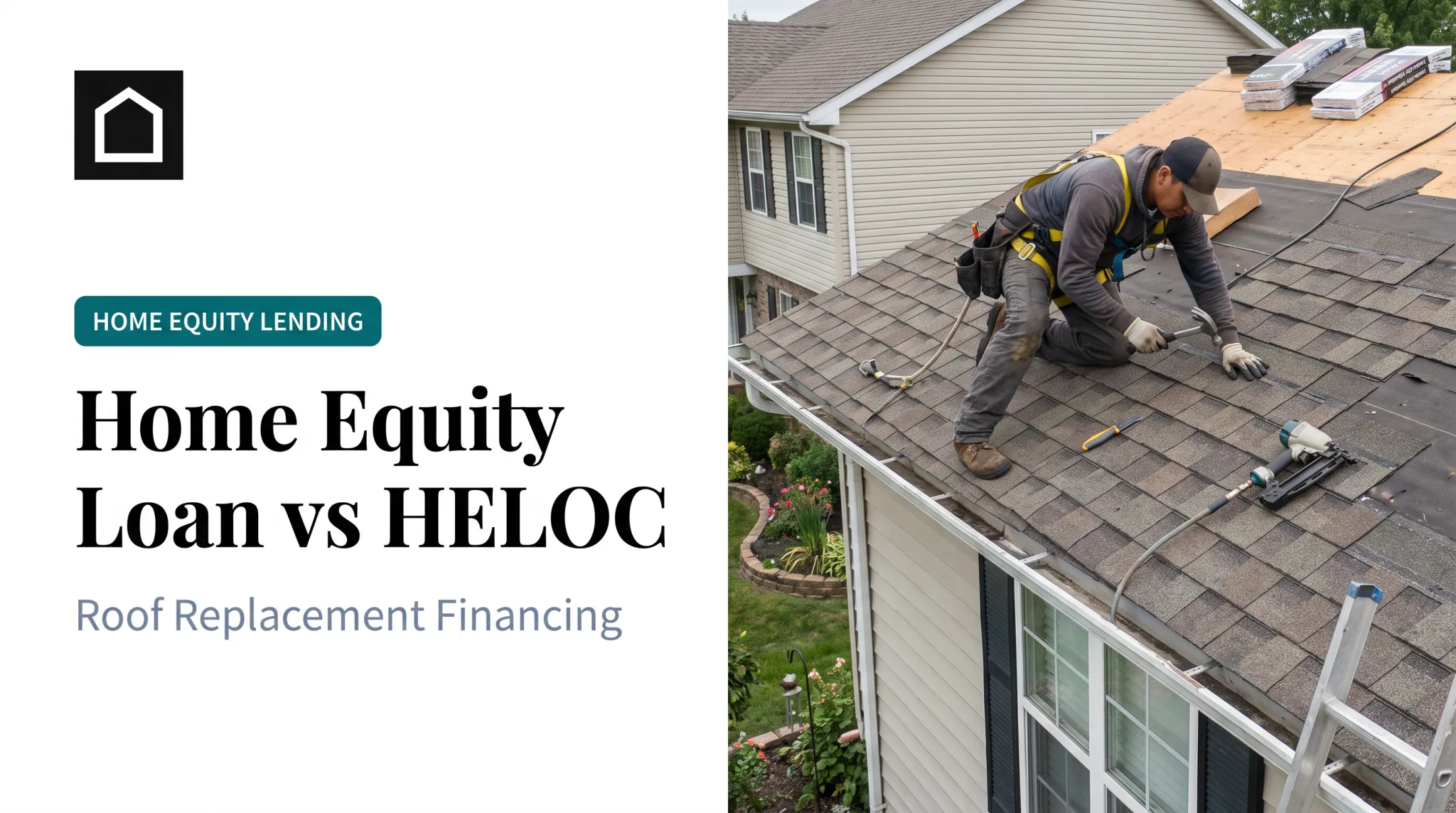

This isn't a small decision. The financing choice you make affects your monthly payment, your total interest cost, and in some cases, whether your home itself is on the line. Two options usually rise to the top: a home equity loan and a home improvement loan. They sound similar. They are not the same thing.
This guide breaks down how each works, what they cost, and which one fits different renovation situations.
Key Takeaways
- Secured second mortgages define home equity loans; home improvement loans are typically unsecured personal loans
- Lower rates and longer terms favor equity loans, but default puts your home at risk
- Faster funding and no collateral risk come with improvement loans—at a higher overall cost
- Choose based on available equity, project size, timeline, and comfort with risk
Home Equity Loan vs. Home Improvement Loan: Quick Comparison
Cost and Interest Rates
The rate gap between these two products is significant. Bankrate's October 2025 benchmark put a 5-year, $30,000 home equity loan at 8.02%, compared to 12.25% for a typical unsecured personal loan of similar structure (Bankrate, October 2025).
Federal Reserve data backs this up: unsecured personal loan rates ran 11.91% to 12.58% through 2024 and 2025, consistently well above secured home equity products.
The takeaway: collateral buys you a cheaper rate.
Collateral and Risk
- Home equity loan: Secured by your house. Miss payments, and foreclosure is a real possibility.
- Home improvement loan: Unsecured. Your home isn't collateral, so a default hurts your credit but not your roof.
Loan Size and Approval Speed
| Factor | Home Equity Loan | Home Improvement Loan |
|---|---|---|
| Typical range | $5,000-$750,000 | $1,000-$100,000 |
| Approval basis | Home equity/appraisal | Credit and income |
| Timeline | 2-4 weeks to close, plus a common 3-day waiting period after closing | Often funded within 1-2 days of approval |

If you need cash next week, that timeline difference matters a lot.
Repayment Term
- Home equity loan: 5 to 30 years, generally fixed-rate
- Home improvement loan: 1 to 7 years (some lenders stretch to 12), also usually fixed
Longer terms mean smaller monthly payments, but more interest paid over the life of the loan.
Tax Deductibility
Under IRS Publication 936, interest on a home equity loan can be deductible if the funds go toward buying, building, or substantially improving the home securing the debt, and you itemize on Schedule A. Personal loan interest generally isn't deductible, regardless of what you spend it on.
What Is a Home Equity Loan?
A home equity loan is a second mortgage. You borrow a lump sum against the equity you've built in your home, then repay it over a fixed term at a fixed rate.
Core benefits:
- Lower interest rates than unsecured borrowing
- Predictable, fixed monthly payments
- Larger borrowing capacity for big-ticket projects
- Potential interest deduction when used for home improvements
Typical requirements include a minimum amount of equity in the home (lenders generally cap borrowing around 85% of home value, per LendingTree) and a credit profile the lender is comfortable with. Exact thresholds vary by lender, so confirm specifics before you apply.
Use Cases of Home Equity Loans
Home equity loans fit large, expensive projects: full kitchen overhauls, additions, and whole-house renovations.
Harvard's Joint Center for Housing Studies found that 22.4% of renovation projects costing $50,000 or more were funded through a combined category of refinancing, home equity loans, and HELOCs, compared to just 3.7% for projects under $10,000. Bigger projects lean on home equity.

This route works best if you:
- Plan to stay in the home long-term
- Have built meaningful equity
- Want predictable payments over a longer stretch
What Is a Home Improvement Loan?
A home improvement loan is typically an unsecured personal loan sized for a renovation project. Approval hinges on your credit and income, not your home's value.
Core benefits:
- Fast funding — often within a day or two of approval
- No risk to your home if repayment gets tight
- Flexible use with no appraisal or closing costs
The trade-off is real: you'll pay a higher rate and repay over a shorter window than you would with a secured option.
Use Cases of Home Improvement Loans
These loans fit best when:
- The project is small to mid-sized (think $5,000-$25,000 repairs, not a full gut renovation)
- You need funds urgently, like after storm damage or a failed water heater
- You don't have much home equity built up yet
- You're planning to sell soon and don't want financing tied to the property
Strong credit matters here: both approval odds and your rate depend on it.
Home Equity Loan vs. Home Improvement Loan: Which Is Better?
There's no universal winner. Weigh these factors:
- Equity available — Not much equity? A home improvement loan may be your only realistic unsecured option.
- Project size — Large renovations generally favor equity loans; smaller jobs often don't justify the closing timeline.
- Urgency — Need cash this week? Unsecured loans fund faster.
- Risk tolerance — Comfortable putting your home up as collateral for a better rate? Or would you rather keep it entirely out of the equation?
- Time horizon — Staying put for years favors equity-based options; selling soon may favor unsecured.
Quick rule of thumb: Major remodel, solid equity, staying long-term → home equity loan. Smaller project, urgent need, or limited equity → home improvement loan.

If you're not sure where you stand, ClearPoint Mortgage Advisors works through your full financial picture — your equity position, your goals, and your timeline — to help you compare financing paths and land on the option that actually fits.
Alternatives to Consider
Not every renovation fits neatly into these two boxes. Other financing paths can fit better depending on project size and timing:
- HELOC: A revolving, typically variable-rate line secured by home equity. Draw only what you need for ongoing or uncertain-cost work; CFPB notes draw periods often run about 10 years, then 10–20 years of repayment.
- Cash-out refinance: Replaces your existing mortgage with a larger one and frees cash for renovations, sometimes at a lower rate than a second loan because it follows primary mortgage terms.
- 0% APR credit cards or savings: Fine for smaller jobs if you can pay off the balance before the promotional rate expires.
ClearPoint also facilitates renovation-specific mortgage programs, including FHA 203(k) and Fannie Mae HomeStyle Renovation loans. These combine a purchase or refinance with approved renovation costs in one structure, which helps if you're buying a fixer-upper rather than upgrading a home you already own.
Frequently Asked Questions
What is the cheapest way to borrow money for home improvements?
Home equity loans typically offer the lowest rates since they're secured by your home. A HELOC can also cost less if you only draw what you need; using cash savings avoids interest entirely.
Is it better to refinance or get a loan for home improvements?
A cash-out refinance can offer a lower rate but resets your entire mortgage term. A separate home equity or improvement loan keeps your original mortgage untouched.
Which is better for renovations: a home equity loan or a home improvement loan?
It depends on your equity and project size. Larger renovations generally favor home equity loans; smaller ones often work better with an unsecured improvement loan.
Should I get a HELOC or a home improvement loan?
HELOCs suit ongoing or uncertain-cost projects since you draw funds as needed. Home improvement loans suit fixed, one-time costs with predictable monthly payments.
How does a home equity loan differ from a HELOC?
A home equity loan gives you a lump sum with fixed payments. A HELOC is a revolving line of credit, usually with a variable rate, that you draw from as needed.
Is it a good idea to use home equity for home improvements?
It can be smart if the renovation adds real value to your home. Just remember it reduces your equity and puts your home at risk if payments are missed.