
Many homeowners find this part confusing. What does it cost? How long does it take? What happens if the value comes back lower than expected?
This guide walks through exactly how a refinance appraisal works, what appraisers evaluate, and how to prepare — so you know what's coming before it happens.
Key Takeaways
- A refinance appraisal sets your home's market value, which determines your loan-to-value ratio and final loan terms
- Appraisers assess condition, size, location, upgrades, and recent comparable sales
- FHA Streamline, VA IRRRL, and USDA streamlined refinances often skip the traditional appraisal entirely
- A low appraisal isn't final — reconsideration of value requests and other options exist
What Is a Refinance Appraisal?
A refinance appraisal is an independent value opinion from a licensed appraiser, ordered by your lender before finalizing a new loan. Since your home secures the loan, the lender needs an objective read on what it's actually worth right now.
This differs from a purchase appraisal in one key way: there's no sales contract to reference. In a purchase, the appraiser checks whether the agreed price matches market value. In a refinance, the appraiser starts from scratch, relying entirely on the home's condition and comparable sales.
Appraisal Types Vary by Loan and Lender
Not every refinance appraisal looks the same:
- Full/traditional appraisal — interior and exterior on-site inspection by the appraiser
- Desktop appraisal — no on-site visit; the appraiser relies on secondary data sources
- Hybrid appraisal — a trained third party collects property data on-site, and the appraiser analyzes it remotely
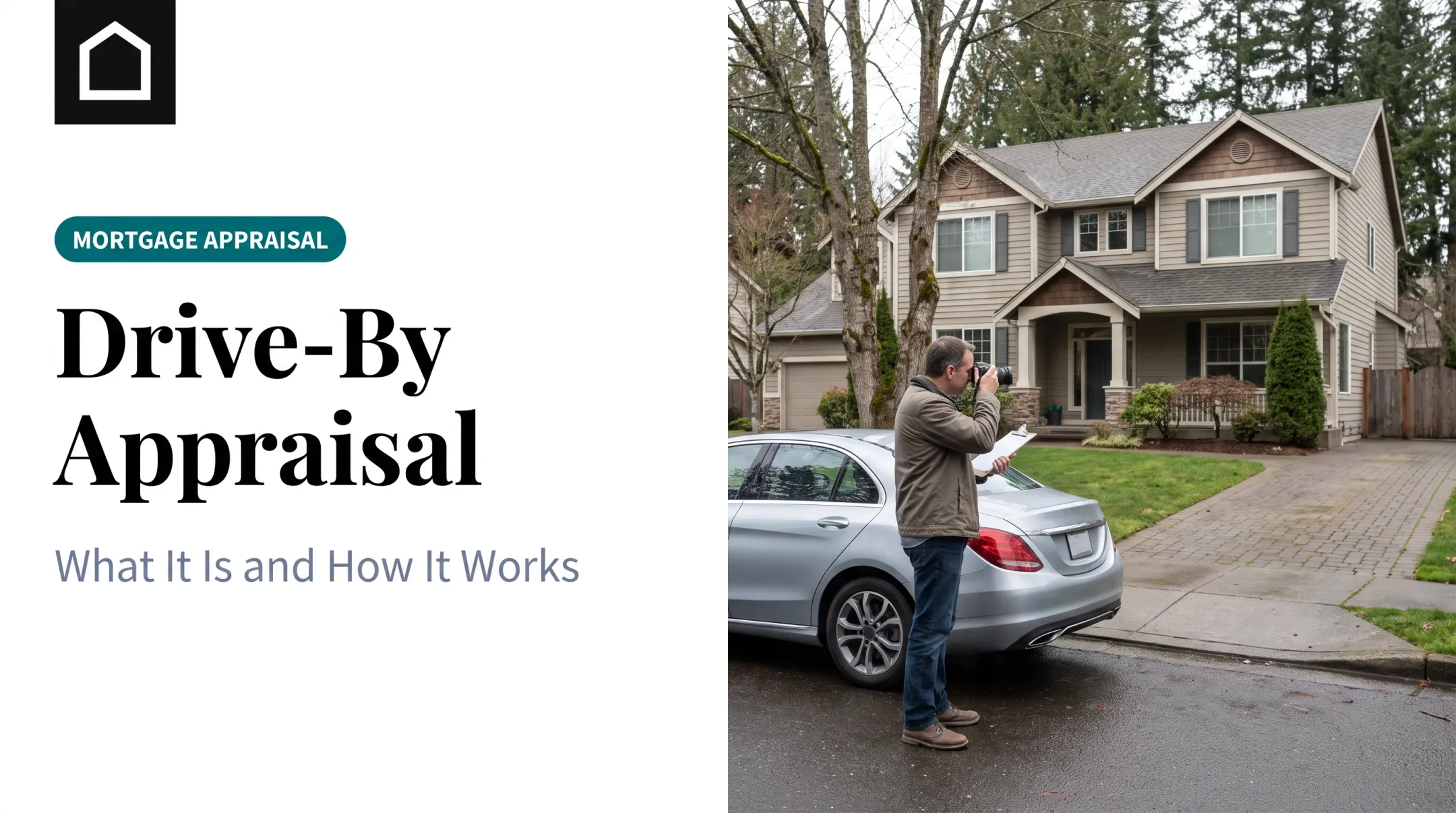
- Drive-by/exterior-only — exterior inspection only; less common, and eligibility varies by lender and loan type
Fannie Mae permits hybrid appraisals for many one-unit properties, including condos, and for certain limited cash-out and cash-out refinances. Two-to-four-unit properties, co-ops, and manufactured homes are typically excluded.

An appraisal is not a home inspection. It evaluates market value, not the safety or structural integrity of the home. If you want a full mechanical or safety check, that's a separate service.
How Does a Refinance Appraisal Work?
A refinance appraisal usually takes several days to a couple of weeks, depending on property scope and scheduling.
Ordering and Scheduling
Your lender orders the appraisal once your application clears initial underwriting. The appraiser then contacts you directly to schedule a visit.
Unlike a purchase appraisal—where the appraiser may barely interact with the seller—you're usually home for a refinance visit. Use that time to point out upgrades and recent improvements.
Property Walk-Through and Evaluation
During the visit, the appraiser will:
- Measure square footage and verify layout
- Inspect major systems (HVAC, plumbing, electrical)
- Photograph the interior and exterior
- Note condition, age, and any improvements
The visit can take 20 minutes for a small, simple home or a few hours for a larger or more complex property.
Comparable Sales Analysis
After the walkthrough, the appraiser researches recent sales of similar homes nearby — known as "comps" — and adjusts for differences in size, condition, and features.
Fannie Mae requires at least three closed comparables, generally using sales closed within the prior 12 months. Older sales can still be used if the appraiser explains why they're relevant, so this window is guidance rather than a strict cutoff.
Final Report and Underwriting Review
The appraiser compiles a report with photos, measurements, and a final value conclusion, then sends it to your lender. Underwriting uses that number to calculate your loan-to-value ratio, confirm your available equity, and finalize your loan terms.

If you want to know how different appraisal values would change your rate, cash-out amount, or loan options, a mortgage advisor at ClearPoint Mortgage Advisors can walk through your numbers before you lock terms.
What Do Appraisers Look For? (Preparation Checklist)
Appraisers weigh five main factors:
- Property size and layout — square footage, room count, functional flow
- Condition and age — wear, deferred maintenance, system functionality
- Location and neighborhood — proximity to amenities, school zones, market trends
- Recent improvements — renovations, additions, upgraded finishes
- Comparable sales — what similar homes nearby have recently sold for
How to Prepare Before the Visit
A few simple steps can help the appraisal go smoothly:
- Clean and declutter so rooms show their true size and condition
- Complete minor repairs (leaky faucets, cracked tiles, broken fixtures)
- Gather receipts or permits for any upgrades — solar, roofing, kitchen remodels
- Confirm HVAC, plumbing, and electrical systems are fully functional
- Boost curb appeal with mowing, power washing, or small landscaping touches
Preparation also means budgeting for the appraisal itself. There's no single national fee for every refinance.
As a benchmark, Freddie Mac reports that its automated ACE+ PDR path averages $200 versus $600 for loans requiring a full appraisal report, a roughly $400 difference as of Q2 2025. Ask your lender for your specific quote and expected turnaround upfront.
When Can You Skip a Refinance Appraisal?
Some refinances don't require a traditional appraisal at all, but this isn't something you can simply request.
Appraisal Waivers (Conventional Loans)
Fannie Mae's Value Acceptance and Freddie Mac's ACE programs can waive the appraisal automatically when underwriting software determines there's enough equity and reliable property data on file. This offer comes from the automated system, not from borrower choice.
Streamlined Government Refinances
- FHA Streamline Refinance — no appraisal required for eligible existing FHA borrowers
- VA IRRRL — no appraisal or credit underwriting package required
- USDA Streamlined/Streamlined Assist — typically no new appraisal needed
ClearPoint Mortgage Advisors offers FHA Streamline and VA IRRRL refinances with reduced documentation versus a standard refinance.
Important: Eligibility depends entirely on your loan program, lender, and underwriting results, not personal preference.
Cash-out refinances usually need stronger equity documentation. Fannie Mae and Freddie Mac still offer limited automated no-appraisal exceptions when specific loan-to-value thresholds are met.
What If Your Appraisal Comes in Low?
A low appraisal changes your loan-to-value ratio, which can reduce your approved loan amount, trigger private mortgage insurance, or affect approval altogether.
It doesn't have to end your refinance, though. Here are your options:
- Review the report for errors — incorrect square footage, wrong comps, or missed upgrades are common
- Submit a reconsideration of value (ROV) — under Fannie Mae guidelines, you can provide up to five alternative comparables and specific factual objections
- Request a second appraisal — sometimes the lender will agree to order a new one
- Adjust the refinance amount — a smaller loan can bring your LTV back in line
- Wait and reapply later — if home values are rising in your area or you've paid down more of your balance, timing may solve the problem on its own

Only one borrower-initiated ROV is allowed per appraisal, and none are accepted after closing. Submit specific, documented objections quickly rather than a general complaint about the number.
Frequently Asked Questions
Do I need an appraisal for a cash-out refinance?
In most cases, yes — lenders need to confirm your current equity before approving additional borrowed funds. Some automated programs offer limited exceptions, but a full appraisal is still the norm.
How much does an appraisal typically cost for a refinance?
Costs vary by lender, property, and appraisal type. Freddie Mac's automated valuation options average around $200, versus roughly $600 for a full appraisal report. It's usually paid upfront or rolled into closing costs.
Can I get an appraisal waiver for a cash-out refinance?
Waivers are less common for cash-out transactions since lenders need a documented value to determine how much equity is available. Some limited automated exceptions exist, but they're the exception, not the rule.
What do appraisers look for during a refinance?
Appraisers review condition, size, location, and recent upgrades. They also compare your home with similar recent sales nearby to estimate market value.
Can a refinance be denied after appraisal?
Yes. Common reasons include income changes, a credit score drop, a debt-to-income ratio that no longer qualifies, or a value too low to support the requested loan amount.
What can I do if my appraisal comes in too low?
Submit a reconsideration of value with stronger comps, bring cash to closing, reduce the loan amount, or wait and refinance later once values or equity improve.