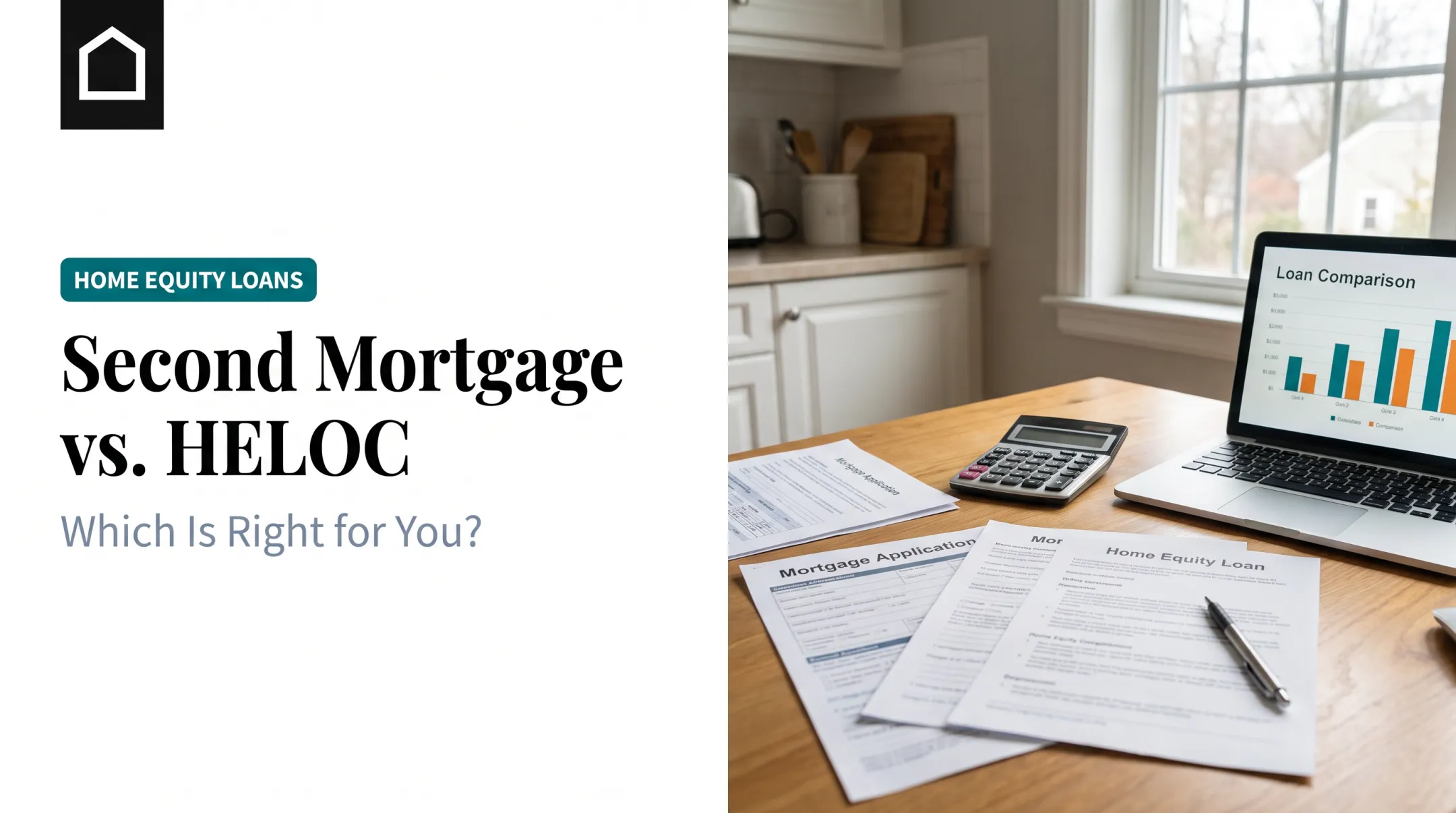

Whatever the trigger, you're likely weighing two options: a home equity line of credit (HELOC) or a credit card. Both give you revolving access to funds. That's where the similarity ends.
The costs, risks, and borrowing power are worlds apart. A HELOC uses your house as collateral. A credit card doesn't. That single difference changes everything about which one makes sense for your situation.
There's no universal right answer here — it depends on how much you need, how fast you need it, and how much risk you're willing to carry. Let's break it down.
Key Takeaways
- HELOC: Secured by home equity, lower rates, higher limits, but foreclosure risk if you default
- Credit card: Unsecured, fast, and often includes rewards, but interest rates run much higher
- Best fit: HELOCs for large planned expenses; credit cards for smaller, short-term needs
- Next step: A mortgage advisor can help you check home equity and HELOC eligibility before you commit
HELOC vs Credit Card: Quick Comparison
Cost and APR
The rate gap between these two products is significant.
- HELOC: Average rate around 7.90% for a $30,000 line as of late October 2025, per Bankrate's national lender survey.
- Credit card: 2025 average APR of 21.22% across all accounts (22.32% for accounts assessed interest), per the Federal Reserve's G.19 report.
That's roughly a 13 to 14 percentage-point gap. On a large balance, that difference compounds fast.

Collateral and Risk
- HELOC: Your home secures the debt. Miss payments long enough, and foreclosure is a real possibility.
- Credit card: No collateral. Default hurts your credit score and can lead to collections, but your house stays yours.
Borrowing Limits
- HELOC: Tied to home equity. Most lenders require 15–20% equity remaining, with combined loan-to-value typically capped around 80–85%.
- Credit card: Based on income and credit score; limits are typically much lower than a HELOC.
Approval Speed
- HELOC: Chase notes the process typically takes 2 to 6 weeks, with 3–4 weeks common for straightforward applications.
- Credit card: Experian says online approval can be near-instant, with some cards usable immediately via digital wallet.
Rewards and Tax Benefits
- HELOC: Interest may be tax-deductible only when funds buy, build, or substantially improve the home securing the loan (IRS Publication 936).
- Credit card: Cash back and points are common, but interest is not tax-deductible.
What Is a HELOC?
A HELOC is a revolving line of credit secured by the equity in your home. Think of it like a credit card, but backed by your property instead of just your credit profile.
It works in two phases:
- Draw period — Usually 5-10 years. You borrow as needed, often paying interest-only.
- Repayment period — You pay back principal and interest, typically over 10-20 years.
Core benefits:
- Lower interest rates than unsecured credit
- Higher borrowing limits, since they're tied to home value
- Potential tax-deductible interest, but only for qualifying home improvement use
Some lenders also offer a fixed-rate conversion option, letting you lock in a portion of your variable-rate balance. Availability varies by lender.

Common HELOC Use Cases
HELOCs work best for expenses you can plan around and pay off over years, not months.
- Home renovations (especially kitchen or bathroom projects)
- Debt consolidation
- Tuition payments
- Large medical bills
That longer payoff window helps explain the recent rebound in demand. TransUnion reported 352,000 HELOC originations in Q3 2025, up 15.8% year over year, after originations had dropped the year before.
If you're not sure how much equity you actually have available, a mortgage advisor can walk through your numbers and help you shop competitive terms. ClearPoint Mortgage Advisors regularly helps homeowners run those numbers and compare HELOC terms.
What Is a Credit Card (Including HELOC-Backed Cards)?
A traditional credit card is unsecured, open-ended revolving credit. No collateral. No lien on anything you own.
Core benefits:
- Fast access, sometimes instant
- Rewards, cash back, and purchase protections
- No home equity required to qualify
The Hybrid Category: HELOC-Backed Credit Cards
A newer product blurs the line. Aven's Home Equity Visa Card, for example, functions like a credit card but is backed by a HELOC. Aven advertises 2% unlimited cash back and credit limits up to $400,000. It requires a lien on the property, which makes it different from a standard credit card.
Use Cases of Credit Cards
Traditional credit cards fit smaller, shorter-term needs:
- Emergency expenses
- Purchases where rewards or purchase protection matter
- Situations where you don't have enough home equity to qualify for a HELOC
The rate math matters here too. Federal Reserve data puts credit card APRs at 22.32% for accounts assessed interest, versus 7.90% for HELOCs. That's a substantial cost difference for carrying a balance.
One caution: even hybrid HELOC-backed cards put your home at risk. Don't assume "credit card" means "unsecured" just because it looks like one in your wallet.
HELOC vs Credit Card: Which Is Better?
There's no single winner. The better option depends on five practical factors:
- Total cost of borrowing — HELOCs are cheaper for large balances carried over time
- Urgency — Credit cards win if you need funds today
- Amount needed — Small purchases don't justify a HELOC's paperwork
- Risk tolerance — HELOCs put your home up as collateral; credit cards do not
- Credit profile and equity — You need sufficient equity to qualify for a HELOC at all
Choose a HELOC when:
- You're facing a large, planned expense (renovation, tuition, consolidation)
- Lower rates and potential tax benefits matter to your bottom line
- You have enough home equity to qualify
Choose a credit card when:
- The expense is smaller or short-term
- You need funds immediately
- You don't have sufficient home equity, or you'd rather not risk your house
Neither product should fund everyday living expenses beyond your means. Using revolving credit that way usually signals a budget problem, not a financing strategy. If you're unsure which path fits, ClearPoint Mortgage Advisors can help you run the numbers on a HELOC before you commit.
Real-World Example: $50K HELOC vs $50K Credit Card
Numbers make this clearer than percentages alone. Here's a $50,000 balance compared across both products, using a 10-year fully amortizing payoff for illustration purposes only.
| Product | APR Used | Monthly Payment | Total Interest Paid |
|---|---|---|---|
| HELOC | 7.90% | ~$604 | ~$22,480 |
| Credit card | 22.32% | ~$1,044 | ~$75,328 |
That's over $50,000 more in interest on the credit card over the same repayment window. These are arithmetic illustrations based on published rate averages, not lender quotes. Actual terms vary.

Many HELOCs allow interest-only payments during the draw period. The CFPB's own example shows a $50,000 balance at 9% costing just $375/month for 10 years, but the full $50,000 principal is still owed at the end. Lower payments now don't mean the debt disappears.
Credit Score Impact Differs Too
- HELOC: Treated as revolving credit by FICO, but generally excluded from utilization calculations (though VantageScore may factor it in)
- Credit card: Utilization is a direct scoring factor: it's part of Amounts Owed, which can influence about 30% of a typical FICO Score
The takeaway: the cheaper option isn't automatically the safer one. A HELOC saves money but risks your home. A credit card costs more but only risks your credit. Which risk you're more willing to accept is a personal call, and one worth discussing with a mortgage advisor before you sign anything.
Conclusion
There's no universal winner between a HELOC and a credit card. HELOCs offer lower costs and bigger borrowing limits, but they put your home on the line. Credit cards offer speed and flexibility, at much higher interest rates.
The right call comes down to matching the tool to the job:
- Expense size and repayment timeline
- How fast you need the money
- How much risk you're comfortable carrying
Get that match right, and you protect both your finances and your homeownership. If a HELOC looks like the better fit, ClearPoint Mortgage Advisors can walk you through your home equity options.
Frequently Asked Questions
How much would the monthly payment be on a HELOC or home equity loan?
Monthly payments hinge on your balance, rate, and whether you're in the draw period (often interest-only) or the repayment period (principal plus interest). A HELOC calculator can give you a personalized estimate from those numbers.
What is the difference between a home equity loan and a home equity line of credit (HELOC)?
A home equity loan gives you a lump sum with fixed payments, per the CFPB. A HELOC is a revolving line you draw from as needed, usually with a variable rate and payments that shift with your balance.
Is it better to have credit card debt or a home equity loan?
Home equity loans typically cost far less in interest, but they risk your house if you default. Credit card debt is unsecured and costlier, but nonpayment risks your credit score, not your home.
Is a HELOC credit card a good idea?
HELOC-backed cards offer rewards and convenience at HELOC-level rates, but they still put a lien on your home, a risk standard unsecured cards don't carry.
Can I get a home equity line of credit with a 500 credit score?
Most lenders look for scores in the 620–680+ range, so a 500 score makes qualifying difficult without strengths like high equity or strong income. Requirements still vary by lender, so ask about compensating factors.