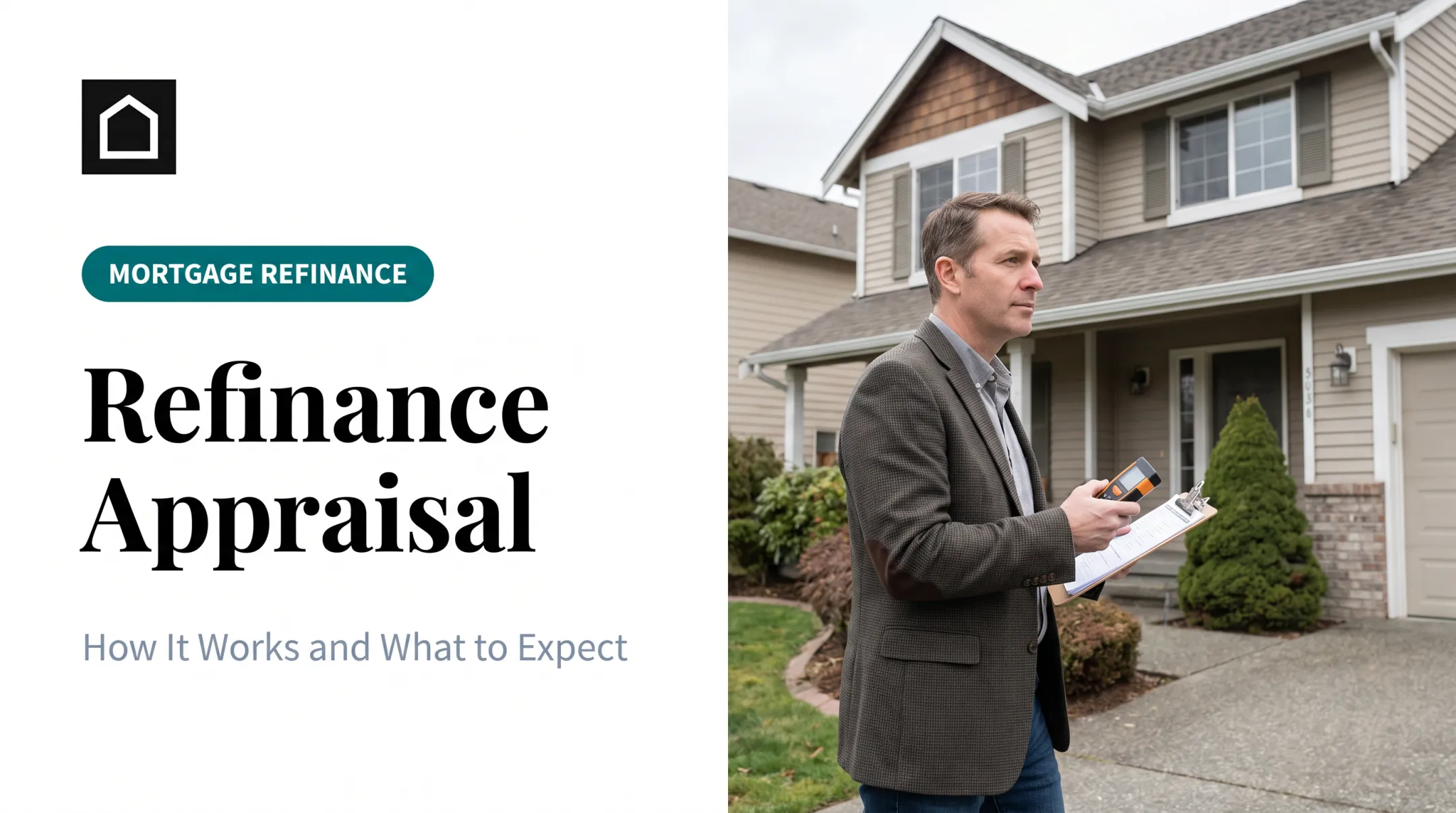

Many homeowners assume "drive-by" means an appraiser rolls past in a car and jots down a number. That's not accurate. It's a structured, standards-based process with its own form, rules, and limitations. This guide breaks down what a drive-by appraisal actually is, how it works step-by-step, and when your lender might use one.
Key Takeaways
- A drive-by appraisal (Fannie Mae Form 2055) values a home from exterior observation, public records, and comps—no interior entry.
- Lenders typically use it for refinances, home equity loans/HELOCs, and some foreclosure situations.
- Same USPAP standards as a full appraisal apply, with narrower data collection.
- Interior upgrades or damage can go unseen and change the value.
- Borrowers generally can't request this type; lender and investor guidelines decide.
What Is a Drive-By Appraisal?
A drive-by appraisal is a licensed appraiser's valuation based on observing the home from at least the street, then combining that with public records and comparable sales data. The appraiser never walks through the interior.
This exists for one reason: speed and cost savings in situations where the interior condition is unlikely to change the value opinion. A refinance on a home with substantial equity is a good example: the lender already has a strong equity cushion, so a full walkthrough may not be necessary to protect their risk.
A drive-by appraisal is also easy to confuse with nearby options. It is not:
- A casual glance: it still requires research, comparable analysis, and a formal report
- A desktop appraisal: those involve no property visit at all
- A hybrid appraisal: hybrids use a third party to inspect the interior while the appraiser analyzes remotely
The standard reporting form is Fannie Mae Form 2055 (Exterior-Only Inspection Residential Appraisal Report), with Form 1075 used for condos. Regardless of the narrower scope, the appraiser still must comply with the Uniform Standards of Professional Appraisal Practice (USPAP), the same standards that govern full interior appraisals.

Automated valuation models (AVMs) and desktop appraisals have grown more common, but drive-by appraisals still fill a clear niche. They pair an in-person exterior visit with a lighter process, giving some lenders a practical middle ground between a full interior appraisal and a no-visit valuation.
How Does a Drive-By Appraisal Work?
The process mirrors a full appraisal's research and analysis. The only missing piece is the interior walkthrough.
Research and Data Collection
Before ever visiting the property, the appraiser reviews:
- Tax records and property deeds
- MLS listings and prior sale history
- Previous appraisal or listing photos, when available
This stage is entirely manual and appraiser-driven. Outdated or incomplete public records can become a real bottleneck: if the county's data hasn't been updated since a renovation, the appraiser's baseline understanding starts off skewed.
Exterior Inspection and Comparable Sales Analysis
The in-person visit typically covers:
- Photographs of the roof, siding, foundation, and lot
- A general read on curb appeal and neighborhood condition
- Street-level views of each comparable property
The real valuation work happens in the comparable sales analysis. Fannie Mae requires at least three closed comparable sales, generally from within the prior 12 months, with adjustments for differences in size, condition, and features.
According to Fannie Mae's Selling Guide, the most recent sale isn't always the best comparable. Older or more distant sales can be used if the appraiser explains why they're better indicators.
Because the appraiser can't verify interior condition firsthand, reliable comps and public records are the main safeguard against an inaccurate value opinion.
Reconciliation and Reporting
The appraiser weighs the exterior findings, comparable sales, and public data to land on a final opinion of value, documented on Form 2055. Per Fannie Mae's reconciliation guidelines, this isn't a simple average — the appraiser must explain which data sources deserve the most weight.
If exterior red flags show up (visible structural damage, a missing roof section, or obvious deferred maintenance), the appraiser can recommend upgrading to a full interior inspection. Freddie Mac's guidelines specifically require this upgrade when improvements can't be viewed from the street or when apparent deficiencies make the exterior-only scope insufficient.

When Lenders Use Drive-By Appraisals
Here's the key point: the lender decides the appraisal type, not the borrower. That decision is based on loan risk, loan-to-value ratio, and the specific investor's program guidelines.
Common scenarios for an exterior-only appraisal include:
- Refinances where the borrower has substantial home equity
- Home equity loans and HELOCs
- VA Streamline (IRRRL) refinances, which typically skip a traditional appraisal
- Certain foreclosure or post-default valuations
Purchase loans, FHA loans, and VA purchase transactions almost always require full interior inspections. HUD's Handbook 4000.1 states plainly that FHA appraisers "must inspect the interior and exterior of the property," with an exterior-only exception only when the appraiser genuinely cannot gain entry.
Eligibility for exterior-only forms also shifts over time. Investor guidelines change, and temporary policy windows (like pandemic-era flexibilities) are not standard practice today. A knowledgeable loan officer can confirm what your specific investor and loan program allow when you apply.
Drive-By Appraisal vs. Full Appraisal
| Factor | Drive-By Appraisal | Full Appraisal |
|---|---|---|
| Interior inspection | No | Yes |
| Field scope | Exterior only, viewed from street | Full walkthrough of all rooms |
| Best suited for | Lower-risk refinances, home equity, some VA IRRRLs | Purchases, FHA, VA purchase, higher-risk loans |
| Accuracy for renovated/damaged homes | Can miss unseen upgrades or damage | Captures full condition |
| Data reliance | Heavier reliance on public records and comps | Direct observation supplements the data |

Exact cost and turnaround differences vary too much by market, lender, and appraiser workload to quote a reliable national figure. What's consistent is the reasoning: a narrower field scope can reduce the appraiser's on-site time, but the research, comparable analysis, and reconciliation work still has to happen either way.
Full appraisals remain the standard for purchase transactions and higher-risk scenarios precisely because they capture what no public record can show: actual interior condition.
Pros, Cons, and How to Prepare
Advantages:
- Often faster to schedule since interior access coordination isn't needed
- Generally lower cost due to reduced on-site inspection time
- Less disruptive for occupants, especially renters or homeowners with limited availability
Drawbacks:
- Interior upgrades (renovated kitchens, finished basements) won't be captured
- Interior damage or deferred maintenance also won't be captured
- Not accepted across all loan types: FHA and VA purchase loans typically exclude it
- More sensitive to outdated or incomplete public records
How to prepare if your lender uses this method:
- Improve curb appeal. A well-maintained exterior supports a stronger first impression during the street-level observation.
- Clear access to the property line so the appraiser can photograph the roof, siding, and foundation without obstruction.
- Keep documentation of any permitted renovations or improvements on hand. Permit records help if your loan officer flags a discrepancy or you want to support a higher value.
Every lender and loan program treats these details differently. That's where speaking with an experienced mortgage advisor pays off. A loan officer at ClearPoint Mortgage Advisors can walk through your specific refinance or home equity scenario and set realistic expectations before the appraisal is even ordered.
Conclusion
A drive-by appraisal is a legitimate, standards-based valuation method with its own form, research process, and quality checks. Knowing how it works helps you set realistic expectations, whether you're refinancing or applying for a home equity loan.
If you're unsure which appraisal type your loan requires, ask early. A mortgage advisor can confirm what your program needs before you're deep into the process and help you avoid delays tied to the wrong valuation method.
Frequently Asked Questions
Is a drive-by appraisal necessary for a home equity loan?
Not always. Lenders often use exterior-only appraisals for home equity loans and HELOCs when the borrower has strong equity. Lower risk allows a faster, less invasive valuation.
What form do appraisers use for a drive-by appraisal?
Fannie Mae's Form 2055 (Exterior-Only Inspection Residential Appraisal Report) is the standard form, with Form 1075 used for condominium units.
How accurate is a drive-by appraisal compared to a full appraisal?
Accuracy depends heavily on comparable sales quality and public record reliability. Interior upgrades or damage are more likely to be missed without a walkthrough.
Can I request a drive-by appraisal instead of a full one?
No. The lender, not the borrower, decides the appraisal type based on the loan program, investor guidelines, and risk factors involved.
How much does a drive-by appraisal typically cost?
Drive-by appraisals usually cost less than full appraisals because of reduced inspection time. Exact fees vary by market, lender, and appraiser—ask your loan officer for a quote.
Are drive-by appraisals allowed for FHA or VA purchase loans?
Most FHA and VA purchase loans require full interior inspections to verify health and safety standards. Drive-by appraisals are rarely used for these transactions.