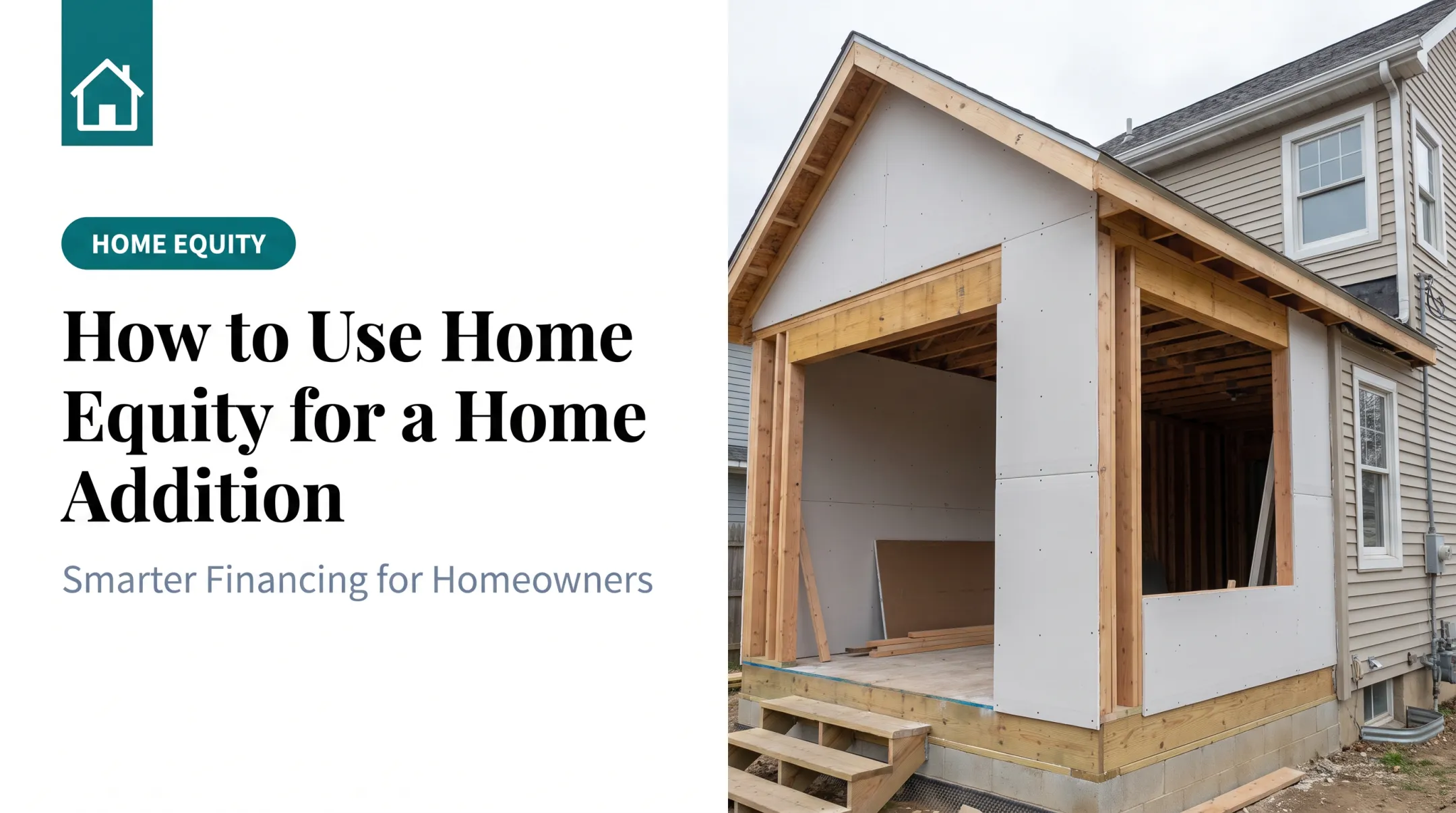

Bankrate's 2026 planning data puts typical home addition costs at $21,910 to $83,349, averaging $51,032, with per-square-foot costs ranging from $125 to $350+ depending on the room and finish level. Many homeowners underestimate this until they start collecting contractor bids.
The right financing depends on three things: how much equity you've built up, how large the project is, and how quickly you need the money. This guide walks through the main options, how to choose between them, and mistakes to sidestep along the way. For homeowners weighing options like HELOCs, home equity loans, or cash-out refinances, ClearPoint Mortgage Advisors offers information on comparing rates and programs.
Key Takeaways
- Equity-based loans (HELOC, home equity loan, cash-out refinance) offer the lowest rates for large extensions
- Personal loans and credit cards suit smaller projects or fast funding needs
- Your choice hinges on project cost, credit profile, and available home equity
- Preserving a low existing mortgage rate often beats chasing the lowest headline rate
What Is a Home Extension and Why Financing Matters
A home extension means adding livable square footage to your existing house. Common examples include:
- Room additions (bedroom, family room)
- Primary suite additions
- Garage or attic conversions
- Accessory dwelling units (ADUs)
Costs vary widely by type. Bob Vila's 2024 data pegs garage conversions around $6,012 to $27,090 (averaging $16,199), while attic additions can run $40,000 to $50,000.
These price tags explain why extensions get financed differently than a bathroom refresh or new flooring. Small renovations often fit on a credit card. Extensions usually require secured borrowing against home equity, since most unsecured products cannot cover these amounts at affordable rates.

Budget before you borrow. A 2020 Houzz & Home study found that 31% of homeowners who remodeled went over budget. Get firm contractor estimates first, add a contingency buffer, then decide how much to borrow.
Best Ways to Finance a Home Extension
Home Equity Loan
A home equity loan gives you a lump sum against your home's equity, repaid at a fixed rate over a set term. It's ideal when you have a fixed-cost project and want predictable payments.
Bankrate's August 2026 average sat at 8.13%, with a range of 5.90%–10.25%. Typical lender requirements:
- Combined loan-to-value (CLTV) generally below 85%
- Credit score benchmarks around 660 or higher (varies by lender)
- Minimum equity of roughly 15%, per common lender guidelines
These are common benchmarks, not universal rules. Every lender sets its own thresholds.
HELOC (Home Equity Line of Credit)
A HELOC works more like a credit card secured by your home. You draw funds as needed during a draw period, then repay what you've borrowed, usually at a variable rate.
Bankrate's average HELOC rate was 7.30% as of late August 2026, with rates ranging from roughly 3.99% to 11.80% depending on the lender and borrower profile.
This structure suits phased extensions well—you only pay interest on what you draw. The trade-off is rate risk: if broader interest rates rise, so can your payment.

Cash-Out Refinance
This replaces your existing mortgage with a larger one, letting you pocket the difference in cash. Fannie Mae's guidelines cap loan-to-value at 80% for a one-unit primary residence.
Cash-out refinancing makes the most sense when your current rate is close to today's market rate, or when refinancing improves your terms anyway. If your rate sits well below current averages—Freddie Mac's benchmark 30-year fixed was 6.66% in late August 2026—giving it up to fund an extension can cost more than it saves.
FHA 203(k) / Renovation Mortgages
Government-backed renovation loans bundle a home purchase or refinance with extension costs into a single mortgage. HUD's Limited 203(k) covers up to $75,000 for minor, nonstructural work, while the Standard 203(k) handles major rehabilitation, including additions and finished attics or basements.
ClearPoint Mortgage Advisors offers FHA 203(k) financing and Fannie Mae HomeStyle Renovation, which can combine purchase or refinance costs with approved renovation expenses. FHA financing may allow down payments as low as 3.5% for qualifying borrowers on purchase transactions.
These programs fit fixer-uppers or homeowners who are refinancing anyway better than someone who already owns free and clear and only needs extension funds.
Personal Loans and Credit Cards
For smaller extensions or when you need funds fast, unsecured borrowing skips the appraisal and closing process entirely. The catch is cost.
Bankrate's August 2026 data shows personal loan APRs averaging 12.43%, typically ranging 8%–36%. Compare that to the 8.13% home equity loan average, a spread of roughly 4.3 percentage points. Credit cards run even higher: Federal Reserve data puts average card rates at 20.94%-22.15% for accounts carrying a balance.
That spread matters. On a $10,000 balance, 4.3 points translates to roughly $430 in extra interest per year before factoring in fees or amortization.

How to Choose the Right Financing Option for Your Extension
There's no single dollar threshold where equity financing automatically wins. A practical rule of thumb: smaller projects (under roughly $15,000–$20,000) often don't justify the appraisal fees and closing costs that come with secured loans.
Larger extensions almost always favor equity-based borrowing.
Work through these questions:
- What's your current mortgage rate? If it's well below today's market average, a cash-out refinance may cost you more long-term than a HELOC or home equity loan that leaves your first mortgage untouched.
- What's your credit score and equity position? Higher credit scores and more equity open up better rates across every loan type.
- Will the extension add resale value? The 2025 Cost vs. Value report shows a midrange bathroom addition recoups about 53% of its cost at resale, while a midrange primary suite addition recoups roughly 32%.
- Have you compared total costs, not just rates? Closing costs, origination fees, and appraisal costs can offset a lower headline rate.
Treat the project as an investment in how you live first—resale recovery is a bonus, not a guarantee. A mortgage advisor at ClearPoint Mortgage Advisors can help you weigh these options side-by-side against your equity position and credit profile before you commit.
Steps to Get Financing for Your Home Extension
Work the financing steps in order so the loan amount follows real project costs—and you compare terms from a position of strength.
- Get contractor estimates first. Collect written bids that cover labor, materials, permits, and a contingency. Lock a realistic budget before you apply so the loan follows your scope, not the other way around.
- Check your credit report and equity. Pull your credit score and estimate available equity (value minus mortgage balance). That pair points you to viable options—HELOC, home equity loan, cash-out refinance, or construction loan—and the rates you can expect.
- Compare multiple lenders. Shop rates, fees, draw rules, and repayment terms across at least two or three lenders or a broker. Accepting the first offer usually costs more than a short comparison pass.

Common Mistakes to Avoid When Financing an Extension
- Letting loan approval dictate project scope. If a lender approves you for more than your budget requires, resist scope creep. Start with a fixed number and stick to it.
- Chasing the lowest rate without checking total costs. A slightly higher rate with lower closing costs sometimes wins on total dollars spent.
- Refinancing away a favorable existing rate unnecessarily. If your current mortgage rate beats today's market, a HELOC or home equity loan preserves that advantage while still funding your project.
Frequently Asked Questions
Can I get a loan to extend my house?
Yes. Common options include home equity loans, HELOCs, cash-out refinances, personal loans, and renovation mortgages like FHA 203(k). Eligibility depends on your credit, equity, and the lender's specific program requirements.
What is a home extension loan?
It's a general term, not a specific product, for any financing used to fund adding livable space to your home. It could be a home equity loan, HELOC, personal loan, or renovation mortgage.
Is extending your mortgage a good idea?
It can make sense if it funds value-adding work or secures better overall terms. Weigh that against losing a low existing rate, since a cash-out refinance reprices your entire mortgage balance, not just the extension amount.
What is the 50% rule for house extension?
It refers to FEMA's flood-related substantial-improvement rule: renovations costing 50% or more of a structure's market value can trigger floodplain compliance. It is not a general financing guideline and only applies in specific flood-zone contexts.
Is it possible to get an extension on a mortgage payment?
That refers to mortgage forbearance, not construction financing. Forbearance temporarily pauses or reduces payments during hardship and does not provide new funds—you still repay the paused amount later.